

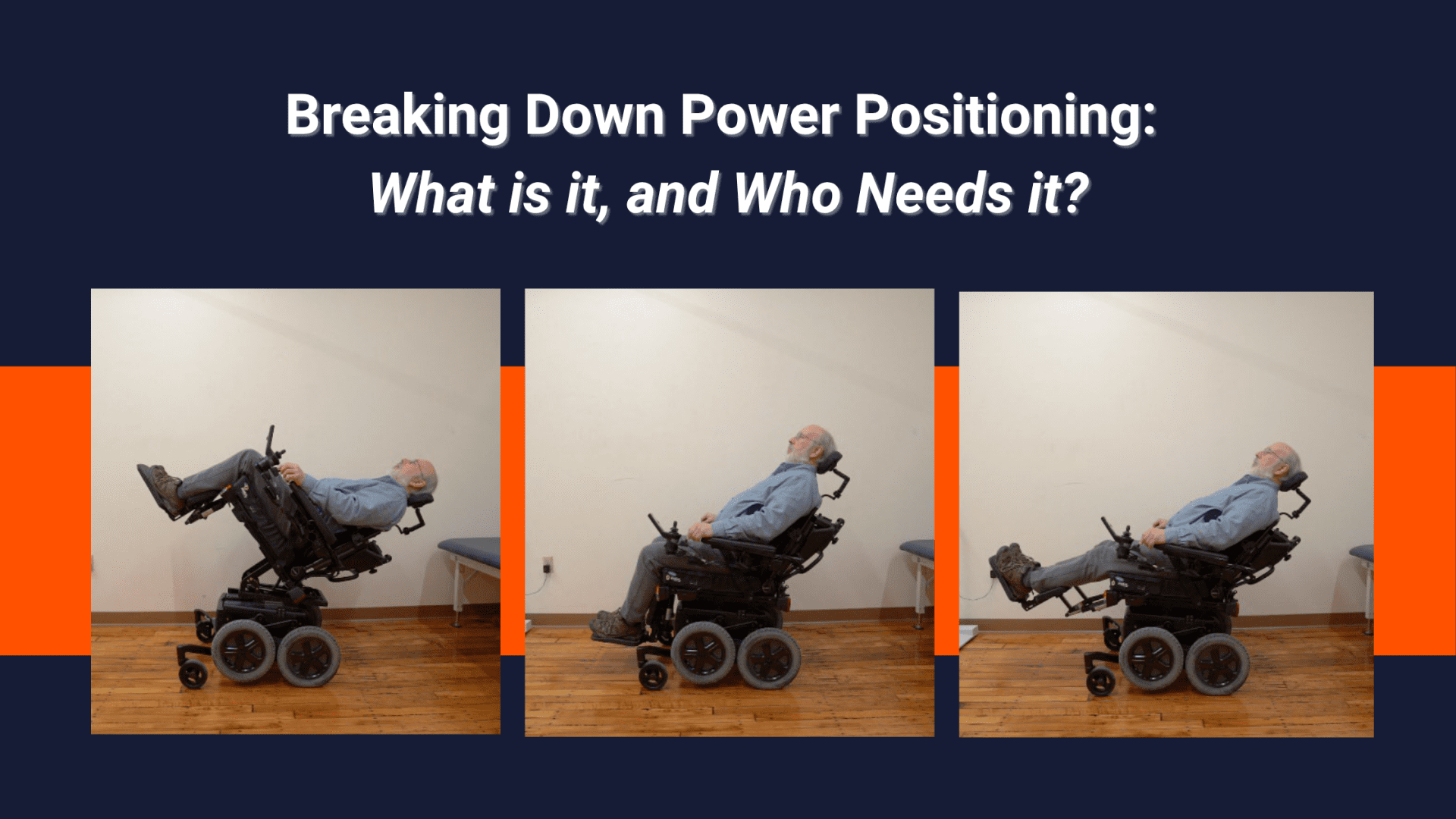
Choosing the right wheelchair can be a complex process. With so many options available, finding a device that meets multiple mobility needs can be challenging. Leveraging its multi-modal technology, the ibot® PMD aims to check as many of those mobility boxes as possible. In 2025, we began offering power positioning, or power tilt and recline, to support a larger portion of the wheelchair community with our device. Let’s break down what power positioning is, why it’s important for many wheelchair users, and how the ibot® PMD can help individuals with power positioning needs feel more comfortable.
What is Power Positioning for a Power Wheelchair?
Power positioning helps manage conditions experienced by many wheelchair users. According to the Rehabilitation Engineering and Assistive Technology Society of North America (RESNA), “these functions play a critical role in enhancing transfer biomechanics, improving sitting tolerance and comfort, managing physiological processes and body functions, addressing postural and orthopedic deviations, redistributing and relieving pressure, increasing independence with activities of daily living, and ultimately optimizing the quality of life and participation in meaningful activities for individuals with mobility impairments.
Power positioning can help manage pressure, improve comfort, increase reach, and make transfers easier. Possible adjustments may include tilt, recline, elevating seat, and an elevating center mounted legrest. Each of these movements can provide different positioning benefits to users and may be needed in full or part based on each user’s unique needs.
Mobius Mobility’s Clinical Education Manager Dawn Hameline explains, “power positioning features can be medically and functionally necessary for many wheelchair users. Any combination of tilt, recline and/or elevating legs can help to redistribute pressure for sitting tolerance and skin health or allow for independent changes of joint angles to manage tone. Seat elevation provides the opportunity for level transfers, improved reach and allows for eye-to-eye interaction reducing chronic neck strain.
Who needs Power Positioning?
Power positioning features are usually needed by those who cannot independently shift their body weight or maintain a functional posture. This could be due to many different neurological or muscular conditions.
The Benefits
There are multiple potential benefits to wheelchair users when power positioning features are included or added to their chair. These include pressure relief and tissue perfusion, decreased pain, improved comfort and less fatigue, increased sitting tolerance, better societal participation, and a general improvement to quality of life and participation in the activities of daily living.
The most widely known benefit of power positioning is pressure reduction. Wheelchair users often remain seated in their chairs for extended periods of time, putting lots of pressure on their skin. That pressure, left unmanaged, can be one contributing factor to the development of pressure ulcers, often called bedsores. By tilting the chair back, wheelchair users can ease this pressure and improve comfort. This position has the potential to help maintain proper blood flow to the skin, reducing the risk of developing pressure ulcers and other possible conditions.
One clinical study found that “standard wheelchair pushups are inadequate for tissue perfusion, as each pushup would need to be maintained for 2 minutes to effectively reduce oxygen tension in the tissues, regardless of frequency or repetition.” This means for a manual chair user to achieve the same benefits that power positioning can provide, they would need to push up and maintain that position for 2 minutes, which would be extremely difficult to maintain.
Many individuals, particularly wheelchair users with postural abnormalities, find it difficult to stay upright for extended periods. Power positioning provides an easy way to readjust by tilting or reclining back and allowing gravity to assist in repositioning and realignment of the spine.
While the external benefits are more visible, re-positioning of the body can also assist with improved breathing, digestion and circulation. Elevation of the legs above the heart may also help decrease swelling in the ankles, legs, or feet.
Beyond physical benefits, tilt and recline features can promote greater independence and positively impact overall mental health and well-being. Wheelchair users may be able to reach higher shelves independently or tilt their chair to assist with transfers, travel, and other daily activities.
What can the ibot® PMD do?
The ibot® PMD has a modular power positioning system that can be uniquely configured based on individual needs as determined during a seating evaluation. Watch this video to better understand the ibot® PMD’s full potential range of motion.
Power Seat Elevation
The ibot® PMD from lowest available seat position can raise 6” in Standard Mode, 10” in 4-Wheel Mode, and 17” in Balance Mode.
Power Tilt
“Center of gravity tilt operates anteriorly and posteriorly and is available as a seat function on manual and power wheelchairs. This tilt is considered a rotational tilt, as it rotates forward or backward around the center axle beneath the user’s body mass.”
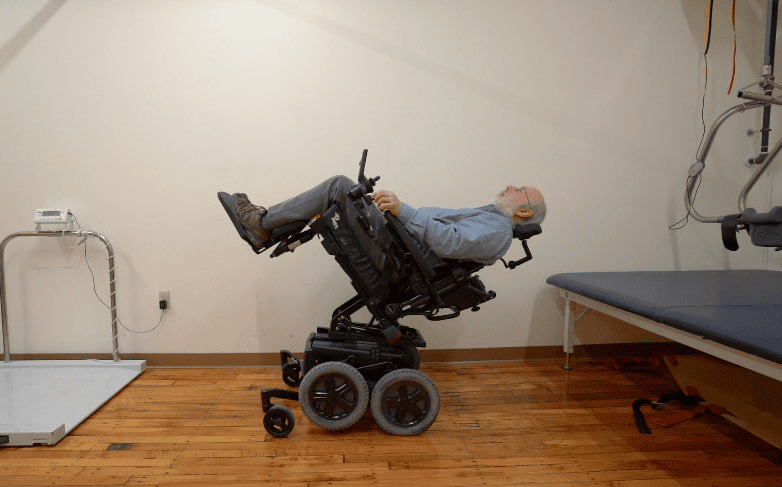
Power tilt adjusts the entire seating system backward while maintaining the chosen seat-to-back angle. This feature helps redistribute pressure and reduce the risk of pressure injuries.
The ibot® PMD can tilt up to 50°. Additionally, the ibot® PMD can anterior tilt up to 16°, depending on depth and foot rigging which can assist with transfers or extend reach.
Powered Recline
“Recline increases the angle between the seat and backrest. This allows individuals to adjust their position to rest, stretch, or complete daily and medical activities more comfortably.” Extended shear reduction helps maintain the position of the back and headrest for improved comfort and function.

The ibot® PMD can recline up to 170° with extended shear reduction.
Power Elevating Center Mount Foot Platform
A power elevating center mount foot platform allows individuals to raise their legs. When used in conjunction with tilt and recline to get legs above the heart, this can improve circulation and reduce swelling. Use of this in conjunction with other positioning features can improve seated comfort by allowing adjustments of position throughout the day.
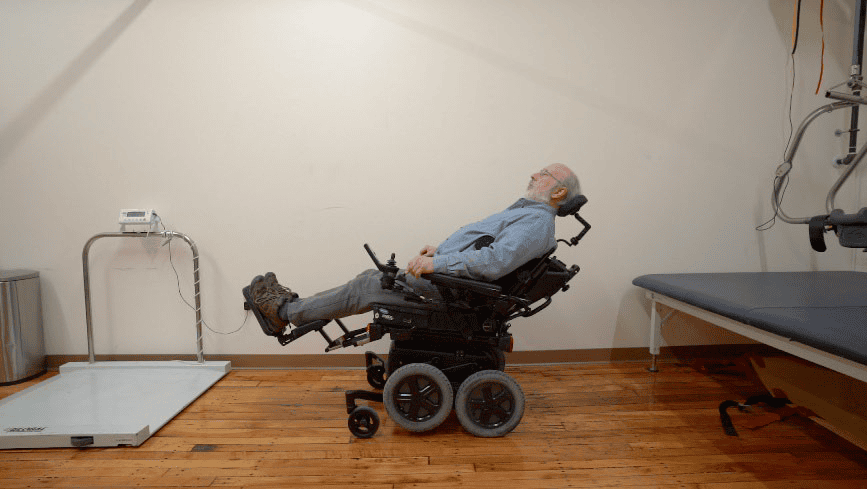
The ibot® PMD offers a power elevating center mount foot platform.
The team at Mobius Mobility is proud to offer power positioning, reflecting our ongoing commitment to improve the ibot® PMD’s versatility. We are excited to keep exploring new ways we can support individuals with mobility challenges.
**Medical claims made in this article are clinically supported by the Rehabilitation Engineering and Assistive Technology Society of North America (RESNA) study, RESNA Position on the Application of Tilt, Recline, and Elevating Leg Rests for Wheelchairs (updated in 2023).